
OnlyFans free pages look like the cheapest way to follow creators, yet a $10 monthly budget can vanish in days without a plan. This guide builds a strict, repeatable spending framework for zero-dollar subscriptions so pay-per-view unlocks and tips never creep past your limit. BestOnlyFans refreshes its rankings every month.
The core idea is simple: treat a free page like a paid one. You set a hard ceiling, decide in advance where each dollar goes, and check your wallet the same way you would check a bank balance. The pages cost nothing to join, but the messages inside them carry price tags, and those tags add up faster than most people expect.
BestOnlyFans ranking guides exist because the platform has no built-in discovery feed or directory. That absence changes how people browse, and it changes how they spend. Without a single feed, you follow more pages, and more pages mean more unlock prompts competing for the same ten dollars.
The Hidden Cost Problem of Free-Only Browsing
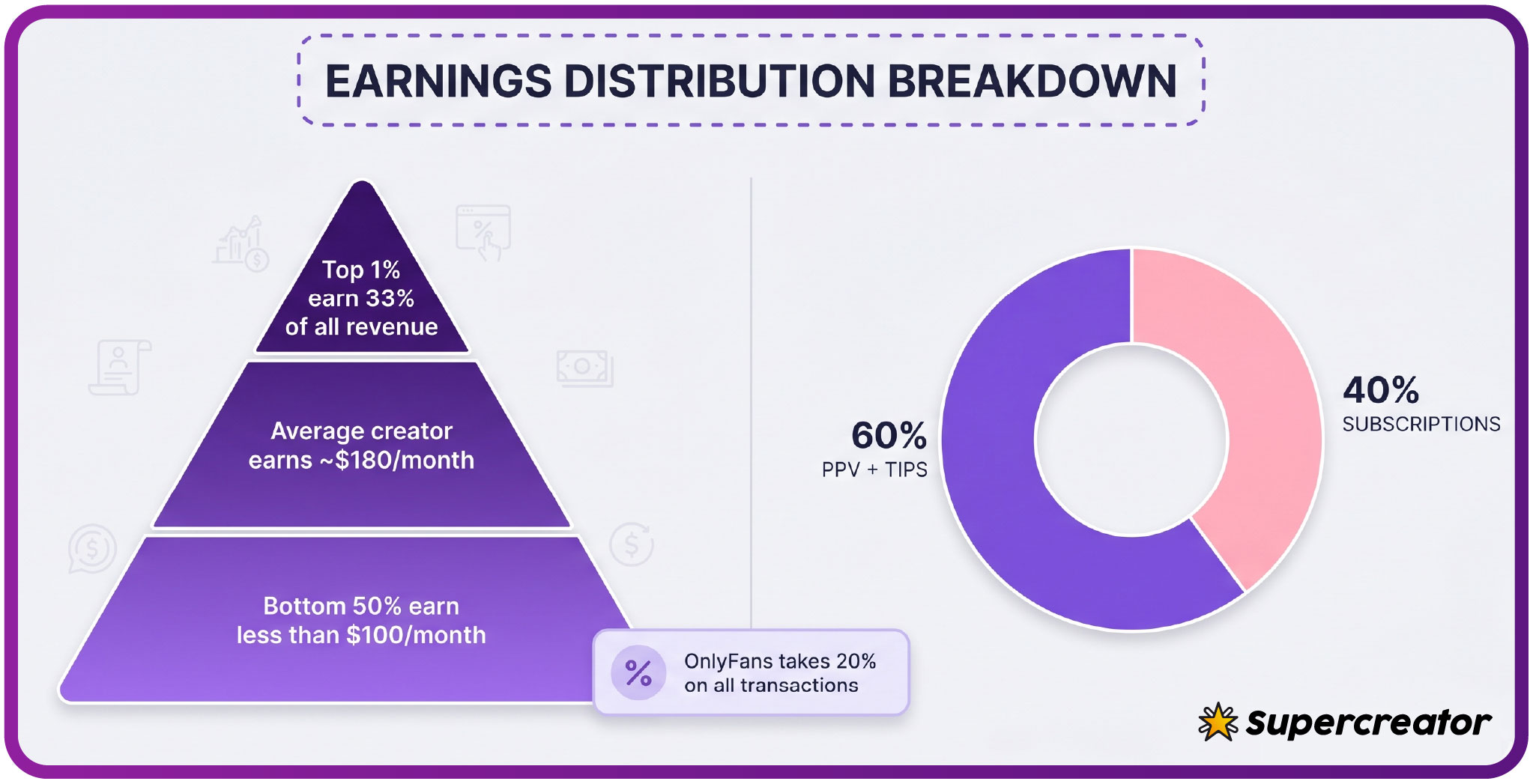
A free subscription sets the base price to $0. Creators on these pages earn through pay-per-view messages, tips, and paid chat, which commonly runs $3 to $5 per message. Nothing about that model is dishonest, but it does mean every inbox notification is a small financial decision.
The accumulation problem is behavioral, not mathematical. A single $5 unlock feels trivial. Three of them in one week consume the entire monthly figure, and most users only notice after the fourth or fifth purchase.
Tip: Before unlocking any PPV message, write the price into a running note on your phone. The act of recording it creates a pause, and that pause is where budgets survive.
PPV messages unlock up to $50, and tips can reach $100. Those ceilings are irrelevant to a $10 plan until the moment they appear on your screen, at which point they dominate the decision. Knowing the range in advance reduces the surprise.
Five Allocation Models for a $10 Monthly Limit
An allocation model removes in-the-moment judgment. You decide the shape of the month while you are calm, then follow the plan while you are tempted. Pick one model per month and do not mix them mid-cycle.
- Single premium unlock: spend the full $10 on one substantial PPV item and skip everything else.
- Three standard PPVs: roughly $3 per unlock, spread across the month at one per ten days.
- Ten micro-tips: ten $1 tips distributed across creators, buying goodwill rather than content.
- Bi-weekly $5 spending: two windows of $5 each, with nothing spent in between.
- Emergency reserve: hold $3 back and spend the remaining $7 across three smaller purchases.
The reserve model suits people who dislike missing a limited-time offer. Holding back a small amount preserves flexibility without breaking the ceiling, and unspent reserve rolls into the next month rather than disappearing.
PPV Price Tiers and Your Budget Impact
Not every price point deserves the same treatment. A $3 unlock and a $10 unlock are not variations of the same decision; one leaves room to maneuver and the other ends the month. Sorting offers into tiers before you buy keeps proportion intact.
- $3 quick unlocks consume about a third of the budget, so up to three fit per month.
- $5 standard content takes half the budget, leaving room for one smaller purchase.
- $10 premium posts consume the entire budget in one move.
- $15+ exclusive material requires saving across two months before purchase.
- $50 maximum unlocks sit far outside this budget and should be declined outright.
| PPV Price Point | Percentage of $10 Budget | Monthly Capacity |
|---|---|---|
| $3 | 30% | Up to 3 purchases |
| $5 | 50% | Up to 2 purchases |
| $10 | 100% | 1 purchase only |
| $15+ | 150%+ | Requires saving across months |
The platform takes a 20% fee on everything, and the creator keeps 80%. That split does not change what you pay, but it explains why creators price PPV messages the way they do, and why small tips still matter to them.
Weekly vs Monthly Tracking: Which Works Better
Tracking frequency determines how early you catch drift. Daily checks catch problems fastest but create their own friction, because constant balance-watching keeps spending top of mind. Weekly reconciliation hits a middle ground that most people can sustain.
| Tracking Frequency | Behavioral Benefit | Risk Level |
|---|---|---|
| Daily micro-checks | Immediate awareness of every purchase | Low overspend, high fixation |
| Weekly reconciliation | Balanced awareness without constant checking | Moderate, correctable drift |
| Monthly retrospective | Clear picture of patterns and habits | High, budget often already spent |
Monthly-only review fails most often because the money is gone before the review happens. By the time you sit down to examine the numbers, the decision window has closed. Weekly works because it catches a $6 week before it becomes a $14 month.
If you want a broader picture of how different pages structure their offers, a roundup like free onlyfans daily can help you compare approaches before committing any of your ten dollars. Comparison shopping is itself a budgeting tool.
Platform Tools for Budget Enforcement
The platform provides several controls that support a fixed monthly limit. None of them will stop a determined spender, but each one adds a step between impulse and purchase, and added steps reduce spending.
- Wallet deposit limits: keep the balance low so overspending requires a deliberate top-up.
- Manual reload requirement: disable auto-recharge so every refill is a conscious action.
- Purchase confirmation settings: keep confirmation prompts enabled on every unlock.
- Weekly spending summaries: check the notification stream for accumulated totals.
- Subscription renewal notifications: note when free pages convert or prices change.
The card verification hold of $0.10 is refunded within days, so it should not be counted against the monthly figure. Treat it as a temporary authorization rather than a purchase, and reconcile it only if it fails to return.
Six Warning Signs Your Free-Only Spending Is Escaping Control
Budget drift rarely announces itself. It shows up as small behavioral changes that feel reasonable in isolation and obvious only in hindsight. Watch for these six indicators and treat any two as a signal to pause.
- Checking your wallet balance more frequently than you check your calendar.
- Hiding purchases from a partner or household member.
- Exceeding pre-set weekly checkpoints before the week ends.
- Unlocking content emotionally after a difficult day rather than deliberately.
- Losing track of which creators you have already paid this month.
- Justifying each purchase as a one-time exception that keeps recurring.
The fifth sign is the most diagnostic. When you cannot list who received your money this month, the budget has stopped functioning as a budget and become a mood.
A mid-article methodology note is useful here: this framework comes from the same ranking approach BestOnlyFans uses, which prioritizes observable page behavior over promotional claims. The discipline transfers directly to personal spending.

Adjusting Your Model When Prices Change
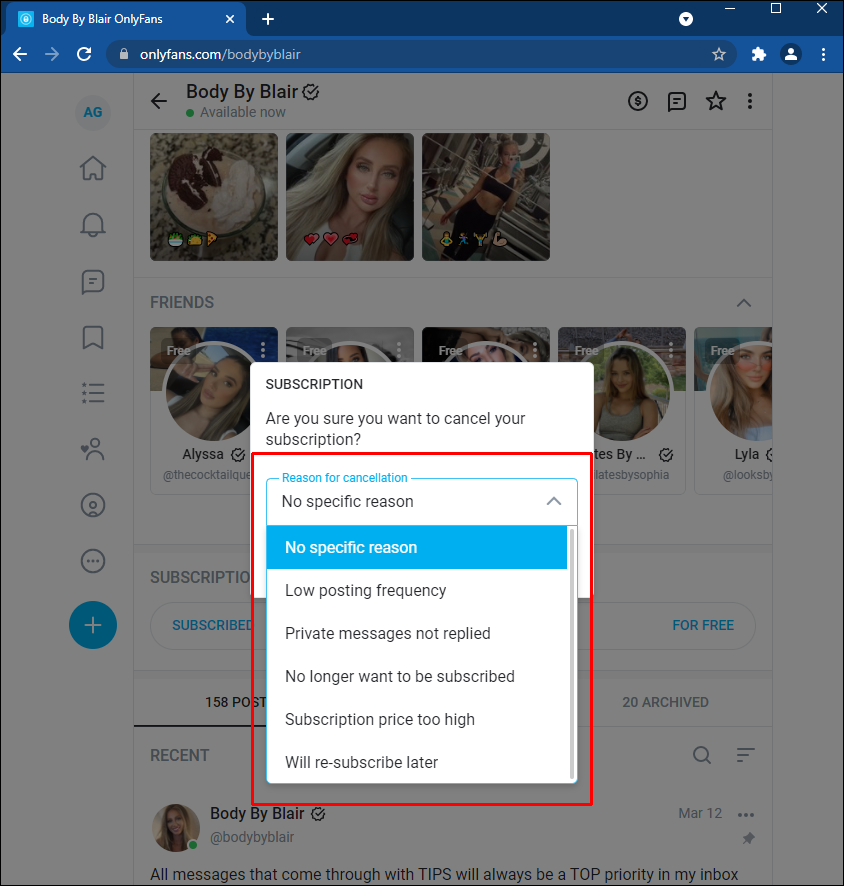
Creators adjust prices, and a fixed budget must absorb that change without collapsing. When a page you follow raises its base price, auto-renew stops, and existing access lasts until the paid period ends. That grace window is your planning window.
If a creator moves from a free page to a paid one, the new base price will sit somewhere between $4.99 and $49.99. Typical paid subscriptions run $4.99 to $15, with averages clustering around $5 to $10, so a single paid page can consume your entire monthly allowance.
Promotional first months can fall below $4.99, sometimes as low as $3 for the first month. These promotions are genuine but temporary. Budget for the renewal price, not the introductory one, or the second month will break the plan.
Review and Reset Protocols for Sustainable Spending
A monthly review converts raw spending into information you can act on. Without it, each month starts from zero knowledge and repeats the same mistakes. The review takes fifteen minutes and pays for itself immediately.
- Export your transaction history from the wallet section.
- Categorize each purchase by creator.
- Calculate cost per minute of content actually accessed.
- Assess satisfaction against total expenditure.
- Adjust next month’s allocation model based on what delivered value.
Cost per minute is the most revealing figure. A $10 unlock you watched for two minutes costs five dollars a minute, while a $5 unlock you returned to repeatedly costs pennies. Value and price are not the same measurement.
Reset the plan at the start of each month rather than carrying forward a stale model. Priorities shift, pages change, and a model that fit January may waste money by March.
FAQ
How can I limit spending if free pages have no subscription cost?
Set a hard wallet ceiling and treat PPV and tips as the real subscription. Keep the wallet balance at or below your monthly figure so exceeding it requires a deliberate deposit. The absence of a base price does not remove the need for a limit; it removes the reminder that one exists.
What happens if I run out of wallet funds mid-month?
Nothing breaks. Unlock prompts will fail until you add funds, which is exactly the enforcement you want. If running out feels like a crisis rather than a plan working, that reaction is worth examining before you top up.
Can I set automatic spending caps on OnlyFans?
There is no single automatic cap that stops all spending. The practical approach combines a low wallet balance, disabled auto-recharge, and enabled purchase confirmations. Together these create enough friction to prevent most impulse unlocks.
How do I track spending across multiple free pages?
Use one running note or spreadsheet for every purchase, regardless of which page it came from. Record the date, amount, and creator. Weekly reconciliation across all pages catches drift that per-page tracking misses.